
- SHOP ALL
-
SUNSCREEN
- SPF + BB CREAM
- FACE WIPES
- BABY WIPES
-
ABOUT
-
EDUCATION

3.5 min read
Our new series of blogs will delve into the goods, the bads and the uglies of ingredients. Why are we using the ingredients that are in our products and why are we leaving others out? What science stands behind them and what can they do to you, your skin and your health. Because as our name suggests, at Wotnot we truly believe in "100% wot's good, 0% wot's not". So only the finest ingredients go in and we leave out what is not needed or is even harmful.
Jojoba Oil
Plant-based oils are all the rage and rightly so. Their active ingredients make them the superheroes of skin-care, keeping your skin looking good all year round, especially during the cooler months. Mother Nature has gifted us with a whole variety of botanical ingredients that make skin happy, healthy and age defying. Age defying you hear… YES … introducing our favourite skin saviour - super hydrating wrinkle fighting - Jojoba Oil.
Jojoba Oil is basically a wonder plant. Pronounced ho-HO-ba, this luscious, dream oil is a true multitasker and its uses are endless. Despite what the name suggests, jojoba is actually a liquid wax which comes from a shrub native to America and Mexico. Centuries ago, native Americans used jojoba seeds to soothe, heal and restore the skin.
Why is jojoba oil good for your skin?
Jojoba oil is naturally gentle, non-irritating, and does not block your pores, making it perfect for every skin type. It helps dry skin, oily skin, aging skin, skin with scarring, sunburn and continues to work its magic on the most sensitive of skin. You got it; it helps! It has nearly all the vitamins and minerals required to promote the growth of healthy skin and hair.
Hydrates skin – Jojoba Oil is unlike any other oil as it is actually more like a wax. Jojoba oil’s chemical structure is unique – closely resembling sebum, a waxy substance naturally produced by our skin glands. The key is its ability to act like our skin’s natural oils. Jojoba it is so similar to our skin’s sebum, it is able to moisturise deeply even if our body fails to do it naturally. It is wonderful for relieving dry, flaking, itching skin (such as skin conditions like eczema).
Acne- Control - Jojoba oil is also non-comedogenic, meaning it doesn’t clog the pores. This makes jojoba oil perfect for acne-prone skin because it tricks your skin into thinking it's already produced enough oil when applied. It penetrates deep into the skin unclogging pores and removing built up bacteria that causes acne. So, it works on both dry and oily skin – win win!
A Natural wrinkle fighter – Packed with antioxidants, jojoba can aid in helping to keep skin plump, smooth, bright and naturally beautiful. The vitamin B complex help to fight free radicals and repair cell damage. And the vitamin E helps speed up cell regeneration. A great anti-aging ingredient which promotes collagen and reduces risk of fine lines. It is also full of amino acids which are the building blocks of collagen. Hooray for wrinkle fighters!
Rich in vitamins and minerals – packed with omega 3 and 6 and vitamins A, & E, it is very soothing to the skin. Unlike most oils, jojoba does not give an oily or greasy appearance on application, and it's also odourless. (Huzzah)!
Natural anti-inflammatory - Jojoba is a natural anti-inflammatory and quenches the thirst of dry, scaly skin conditions such as eczema and psoriasis. The vitamin E and iodine help with inflamed, compromised skin.
Healing and Nourishing – The healing properties of jojoba have been known for centuries, including its ability to reduce the look and feel of irritation and unwanted marks such as reducing scars and stretch marks. This wonder oil also soothes chapped, dry or sunburnt skin so it’s a no wonder it’s super popular all year round.
Jojoba is one of the reasons why Wotnot’s skincare is so effective across all skin types, life stages and concerns. We believe that nature is our best medicine, which is why we use natural, organic ingredients like jojoba oil in our products and leave out harmful additives, and chemical nasties.
Wotnot proudly uses ACO (Australian Certified Organic) jojoba oil in our:
We LOVE hearing from families and customers who have benefitted from our products and nature’s wonder oil. Afterall, our products have come to life with our community at the heart. We know you care about what you and your families put on your bodies, so we created products including the magic of jojoba. We love harnessing the power of nature to bring you gorgeous products which are good for your wellbeing and the planet. And Jojoba – let’s face it; it’s liquid gold for your skin!
You dream. We create.
Contributor: Marianne Randall

5min read
Aaaaah sleep…. If you are a parent or parent-to-be it is one of the most thought about and talked about topics. Everyone has an opinion and more often than not, these can be conflicting. Wrap that up with your own personal ideals and expectations and it can be a pretty confusing and overwhelming time.
Kylie Pintos-Oliver, founder and sleep consultant at Lunar Haven, has seen many mummas and babies struggling with sleep for too long unnecessarily. She is here to help you feel more at ease with your routine, debunk some of the stigmas around sleep training and tell us how and when to find help.
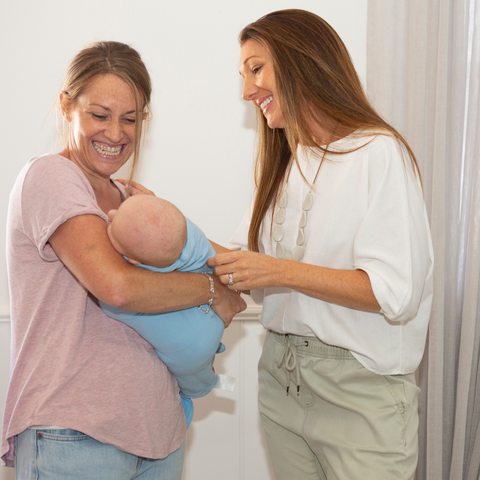
Kylie: I am here to hopefully ease some of the burden and help you understand why sleep is so important and why we should never feel guilty about asking for support with it.
Now let’s not sugar coat it, there are going to be times where sleep feels like this sacred, mysterious land, we know we have been there before but cannot seem to find our way back. By arming ourselves with the appropriate information and support it is possible to find our way back to this luxurious land of slumber, making these sleepless moments more like little blips as opposed to long enduring years.
Diving into the world of sleep can seem complex, but when you break it down, there are a few key areas to focus on that help make a big difference – Creating a bedroom environment that promotes sleep, along with healthy sleep habits and age-appropriate awake windows or nap times, all work together to create an ideal sleep situation. Here are a few tips that I swear by to get you started.
Sleep environment –
Healthy Sleep Habits –
Aim to have your baby into the bedroom a good 20-30 minutes before you want them to be asleep and implement a calm, predictable wind down routine. Keep it simple and most importantly consistent. Some examples of things you might like to include are –
*remember you don’t need to use all of these and you probably want to have a shorter version for naps and increase with an extra step or two for the evening bedtime.
If you are already following this advice and the pieces just don’t seem to be falling into place, please don’t feel like you need to keep struggling or wait until things get worse. The earlier we choose to work on sleep the better it is for everyone.
“Sleep Training” or Coaching as I prefer to call it, is not the big, scary image some of us have of closing the door and listening to your baby cry for hours on end. It also does not need to be something that only parents who are at breaking point because their babies scream all night utilise. Sleep Coaching can be a great pre-emptive way to arm yourself with the tools you need to be set up for sleeping success before problems arise. (Think Birthing Class before you go into labour…)! I believe when it comes to sleep, like with most things, prevention is better than cure, so getting ahead of the sleep game right from the very start, or as soon as you see things begin to unravel, can make all the difference for both you and your baby. Again there can be differing ideas out there, so it is a matter of finding what aligns with your family values and then what actually works for your individual baby (because sometimes baby comes along and they have their own ideas of what they need).
It is also important to remember that sleep is a learned skill, and just like talking, toileting, crawling and walking it is not something that comes easily to all babies. We don’t expect babies to know how to master these skills on their own do we? So why would sleep be any different?
Sure, some babies appear to stand up and start walking overnight and for some sleep can come quite naturally too. However, more often than not, for a lot of babies it can be quite challenging and require a lot of support or “training”, which can be met with resistance and frustration on both sides. Tired and frustrated babies (and mummas) cry. They sometimes cry when we put them to bed, they also sometimes cry when we need to change their nappy, or get them in or out of the bath, or feed them, but this does not mean we don’t change their soiled nappy, or never bath or feed them. We as the parent need to be able to recognise what they need and support them through the tears with love, understanding and gentle encouragement.
Choosing to work on sleep or ask for support with sleep should always be seen as a positive and proactive step and not something we put off until we are at breaking point. We as a society are becoming so good at outsourcing tasks to someone with the right experience, but when it comes to sleep and our children there is still this expectation to endure it in order to be a gentle parent, or pressure to just put up with it because “they will grow out of it"… but those days, months, years can be long, isolating, lonely and clouded with self-doubt… and where is that village everyone keeps talking about?
Understanding infant sleep is tough and while it is my strength and passion, it doesn’t need to be yours. We all need to play to our strengths and support each other where we can. Give me a tired, crying baby over a spreadsheet or anything IT related any day, but I don’t try to do these things myself (well, sometimes I do but it usually ends in tears, a tantrum or wine!) I outsource them to practitioners with more knowledge and experience in the relevant field.
I am hoping we can reshape how we see Infant Sleep by giving you the parents, the support you need and deserve… guilt and stigma free. I want us to offer more knowledge and support where we can to get on top of sleep issues before they become damaging to your own mental health, your relationships and your day to day life.
Blog contribution by Kylie Pintos-Oliver from @lunar.haven.sleep

3 min read
Lets’ talk bath time. We invited Maddie, a practicing midwife of 7 years, to teach us how to bath a new baby. As a mum of two little girls and from her work in postnatal services within the hospital and in the home, she loves educating new families and instilling confidence during the postpartum stage, with particular attention around parent-crafting.
Parent- crafting or mother crafting is a great skill or knowledge base on how to care for new babies and young children. One of her favourite skills to teach is how to bath a new baby!
Bath time can be a beautiful time to bond with the baby and help calm them in the evenings, its also a great way to get the whole family involved. Baby bathing should be delayed until your baby is at least 48-72 hours, your midwife can show you prior to discharge how to bathe your baby and incorporate things like baby massage and tummy time.
Why the delay in baby bathing?
Babies are born covered in what we call birthday frosting! Otherwise known as vernix, it is a creamy substance that protects delicate newborn skin. Letting vernix naturally absorb has wonderful benefits for baby.
When should you bath your baby?
You can bath your baby at any time of the day really, if your baby loves a bath you can use it as a lovely way to settle them for sleep in the evening. It’s always best to bath baby distraction free, avoid using your phone and have everything you need prepared.
So here are my favourite tips and tricks for baby bath time!
Preparation is key
When its time to get out
After the relaxation
follow @goldenandwilde_ for more helpful tips and inspiration


