
- SHOP ALL
-
SUNSCREEN
- SPF + BB CREAM
- FACE WIPES
- BABY WIPES
-
ABOUT
-
EDUCATION

Whether you’re a novice self tanner or just petrified of revisiting a previous tanning disaster (we all have had one) then read on to find out how the pros do it.
There’s a reason why self tan is often called a holiday in a bottle and after all, a natural looking tan can have you looking 1 kilo lighter, 5 years younger and 50 yoga hours more toned.
Follow these insider tips, step by step, to get your natural looking glow on.
PREPARATION
Never underestimate the power of prep work!! If you’re lazy and skip this step…. It’s at your own peril.
Exfoliate your whole body with a gentle purpose-built mitt. There’s no need to use expensive scrubs as you can get the most premium sustainable result naturally, with one of these over and over again.
You always want to make sure you remove any dry, rough patches of skin as they tend to attract and hold more colour than skin that’s even and smooth, which can result in a patchy result.
Once your skin is soft and silky, remove any unwanted hair and make sure you stay lotion and perfume free before you tan.
CHOOSE THE RIGHT PRODUCTS
You wouldn’t believe how far self tan has come in the way of innovation in the last 5 years.
You can now get a certified organic mousse that’s quick drying, smells like a spa treatment and leaves you looking like you’ve just arrived home from a week in Hawaii.
Always look for a formula with a guide colour, this is critical so you can see where the product is being applied. Without this, there’s every chance you’ll miss a spot and it’s almost impossible to reapply without a streaky looking finish.
If tanning mousse seems too scary there’s also a gradual tanning lotion to dip your toe in the water. This can also be used as a tan extender to keep skin hydrated and avoid skin looking patchy as the tan wears off.
USE THE RIGHT AMOUNT OF PRODUCT
Try as hard as possible not to use more product than you need. A little goes a long way!
Aim for 1-2 pumps of mousse for each arm, lower and upper leg, torso and chest. If you apply more than you need it can make for an uneven application and the end result will look really unnatural.
If you want a deeper tan, add another layer after the first has dried. Tip, the first time you use a product trial one layer first and see what it looks like once it’s developed. That way there are no nasty surprises.
USE A TANNING MITT
This is a nonnegotiable for so many reasons. If you’ve ever wondered whether a tanning mitt is necessary, it is!!! The soft velvet surface of the mitt allows you to evenly distribute, blend and pat the mousse onto your skin. Without a mitt its far more likely you’ll end up with visible streaks, not to mention tan on the palm of your hands…yuk.
How to tan your hands
When self tanning you always want to avoid over-tanned hands, wrists and palms. Have you ever noticed that your skin is naturally lighter towards your wrist, and the palms of our hands don’t tan at all.
When tanning the inside of your arm always blend towards your wrist and be sure not to leave a line at the base of your hand.
Once your arms are done then use what’s left on the on the mitt to softly sweep over the top of your hand towards your fingers for a natural coverage.
Then last, but not least, take a damp cloth or face wipe and sweep in between fingers and over the top of knuckles to remove any excess product. This is key in natural looking tan on the hands.
how to tan your feet
After hands, feet are the next biggest giveaway of a dodgy tan job. Be careful not to apply too much to ankles and notice where the skin would be naturally tanned.
Like hands, there’s no need to apply extra product to the mitt when tanning the top of your feet. Simply sweep the mitt gently over the surface and blend for a natural look.
Finally, take your damp cloth or face wipe and touch up the sides of the feet and in between toes.
DON’T FORGET ABOUT TANNING YOUR FACE
For a foolproof faux glow, make sure that you give your complexion a healthy glow too.
Face Tanning Mist is the hottest trend in beauty right now and there’s a reason for it. Not only does it give you that natural beachy look daily but it tones and hydrates at the same time.
You can spritz it directly onto your face or use a cotton pad for a flawless finish and bonus you will remove any excess make up, sunscreen or dirt post cleanse and tone all at the same time. Use it each night before you go to bed until you reach the desired colour. You’ll never look so healthy and well.
Hot Tip – Spritz Face Tanning Mist in hard-to-reach places like your back.
Tan Maintenance
Moisture is key to maintaining a natural looking, evenly fading tan. Always apply a deeply nourishing moisturiser morning and night to keep your skin well hydrated. It’s always a good idea to drink plenty of water too.
If you want to extend the life of your glow, Gradual Tan daily is a great option for a two in one boost of hydration and tan at the same time!
Now you know how the pros do it, you can give it a go yourself.

If there is one thing we have all been hearing since we were very young, its just how important it is to use sunscreen. But what do you really know about it?
What’s the difference between a Mineral and a Chemical sunscreen?
A mineral sunscreen is just what it sounds like—a sunscreen that uses minerals as its active (protective) ingredients. The minerals most often used are zinc oxide and titanium dioxide. Both of these ingredients occur naturally, although they can also be created synthetically.
Mineral sunscreens are sometimes called physical sunscreens because they provide a physical barrier between your skin and the sun’s rays. Think of these minerals as tiny mirrors resting on the surface of your skin, bouncing away harmful UV rays!
Chemical sunscreens penetrate your skin and use synthetic compounds like oxybenzone, octisalate, avobenzone and 4-methylbenzylidene camphor, to create a chemical reaction in our skin. This reaction transforms the UV rays from the sun into heat and is released into the air.

Current Debate Around Actives
There is an ongoing debate about sunscreen ingredients, specifically chemical UV actives and their effect on hormones and we have all heard about the damaging effects those sunscreens containing two common chemicals have on coral reefs.
Australian Standard
The Australian Standard for sunscreens allows a maximum sun protection factor (SPF) rating of 50. While this sounds like a significantly higher level of protection than an SPF30 the difference is not really in the amount of UV protection. An SPF 50 sunscreen will filter 98% of UV radiation while an SPF30 product filters 96.7% so the difference is not large.
What Does SPF Mean?
SPF stands for Sun Protection Factor. SPF numbers are an approximate indication of how much protection from the sun a product will provide for your skin. Everyone’s skin is different and each person’s skin can be exposed to the sun for different lengths of time before burning. Those with fair skin will burn faster than people with olive skin. Sunscreen extends the time before burning by a multiple of the SPF. For example, if you have fair skin and would normally burn in 10 minutes without any sun protection then an SPF 30 will give you 30 x 10 minutes protection or 5 hours.
The issue is that all sunscreens will rub off over time with normal activity and perspiration and so in some cases, the higher SPF can give a false sense of security. The most important thing to remember is that no sunscreen provides total protection and will rub off over time, that's why it is always important to reapply regularly (every 2 hours) and cover up using appropriate clothing and eyewear especially during the hottest part of the day.
Can using SPF every day cause Vitamin D deficiency?
No, you will still be able to absorb enough Vitamin D from incidental places such as your scalp, nails or that spot on your back where you just cant reach when applying your sunscreen.
Infants and People with Sensitive Skin
It’s important to note that an infant’s skin is different from an adult’s. Our bodies produce a pigment called melanin that protects our skin from ultraviolet damage by causes it to darken/tan. An infant produces less melanin than an adult which means that their skin will burn more quickly.
An infant’s skin is thinner and contains more water than an adult. Also the top layer of an infant’s skin called the epidermis doesn’t bond as tightly to the layer below called the dermis. So unlike adult skin that has a tight seal between these layers, an infant’s skin is easier to pass. This is significant when also coupled with the fact that infants lack fully developed detoxification systems.
Babies and infants should be kept out of direct sun exposure but if you need to use a sunscreen choose a sunscreen for sensitive skin with a physical active like zinc that is dispersed in a natural lotion. 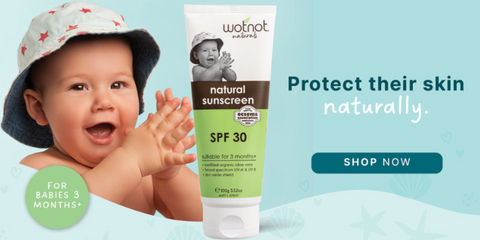
People with sensitive skin often find that they react to conventional sunscreens, so a natural sunscreen alternative with gentle ingredients and an SPF of 30 will be their best option too. Always check the label and look out for toxic ingredients that may have been added to make the sunscreen more smooth or wearable such as parabens, phthalates, sodium laureth sulfate, and fragrance (unless it’s a natural preservative). Unfortunately, unlike in the USA and Europe, Australian regulations which are set by the Therapeutic Goods Administration (TGA), do not require sunscreen brands to disclose all ingredients on the packaging. We believe that this is wrong as it effectively leaves consumers in the dark as to what they are putting on their and their kids bodies. We have contacted the TGA to address this and will continue working to see regulations change.
How much sunscreen should I apply?
All too often, we don’t apply enough sunscreen and forget to reapply. The Cancer Council recommends the following:
“Sunscreen needs to be applied 20 minutes before going outdoors. Use a generous amount of sunscreen. When applying sunscreen, you need at least one teaspoon per limb, one for the front of the body, one for the back and one for the head. A full body application for an adult should be at least 35mL or seven teaspoons”. (https://www.cancer.org.au/cancer-information/causes-and-prevention/sun-safety/about-sunscreen)
Always remember to wear appropriate clothing, hats and eyewear, stay out of midday sun and reapply sunscreen regularly. And then just enjoy the great outdoors!
Find out more about choosing the right sunscreen for you on our website, or visit @environmentalworkinggroup sunscreen hub, for a 101 on sunscreen ingredients! www.ewg.org/sunscreen/

The softness of a newborn baby's skin is legendary, however challenging skin conditions such as Eczema are common in babies and kids and can be rather anxiety inducing for parents.
I’m sure that googling “Atopic dermatitis on baby’s face” or “Baby skin cracking in folds” is not something you thought you’d be doing, certainly not in the first 6 months of parenting, however Eczema is a very common condition in babies and children and usually first appears between ages 3 and 6 months.
Here at WOTNOT, we pride ourselves on creating natural, toxin free baby products that are safe and nourishing for baby’s skin. Along the way we have gathered some tips on how to manage Eczema, based on our experience as parents, feedback from our customers and our insights into creating organic and natural products. Eczema is a uniquely challenging journey for each family. We encourage you to reach out to your baby’s paediatrician or family GP for a definite diagnosis and treatment plan.
What Is Eczema? (EK-zeh-ma):
Eczema is a condition where the skin gets irritated, red, dry, bumpy, and itchy. There are several types of eczema, but the most common is ‘Atopic dermatitis’. Usually, some family history of asthma, hay fever, and skin rashes may make a child prone to developing eczema. However, any child may develop this skin condition. Additionally, an environmental exposure may trigger the rash, causing a predisposition towards having a reaction in the future.
What Are the Signs & Symptoms of Eczema?
Symptoms can vary:
How can parents help?
The goals are to ease itching and inflammation of the skin, increase moisture, and prevent infection and stay away from triggers that cause flare ups.
Below are some tips on eczema relief for kids:
We highly recommend the WOTNOT 30 SPF NATURAL BABY SUNSCREEN because of its clean ingredients, it’s super moisturising and also a sunscreen (win -win) so you don’t have to apply both during the day. We receive rave reviews about how much it helps little ones with Eczema.
** WOTNOT pro tip: if you’re applying moisturiser or sunscreen to a toddler, use a make-up brush! We use the WOTNOT VEGAN MAKEUP BRUSHES Amazingly applying with a brush takes away the toddler battles (most of the time). It is truly a game changer! You can keep one brush aside for their sunscreen and one for other body moisturisers.
It is very stressful and emotional watching a child deal with any kind of illness or challenging condition. If you are reading this blog, you are probably searching for how to best help your child manage their Eczema. We hope that some of these tips can help guide you a little on your journey. If you have any questions about our products and how they might help your family with skin conditions, please GET IN CONTACT. We would love to hear from you.
Contributor: Marianne Randall

Since 2009, Wotnot has proudly been supporting Bear Cottage children’s hospice by donating a percentage of profits from our natural baby range to help this amazing facility.
When families are told that their child's life will be cut short, their everyday existence takes on a monumental change. As they embark on such a terrible journey, there are limited options available to help them get through each day and answer the many questions that arise. Bear Cottage believes that life, however brief, should be enriched, enjoyed and celebrated.
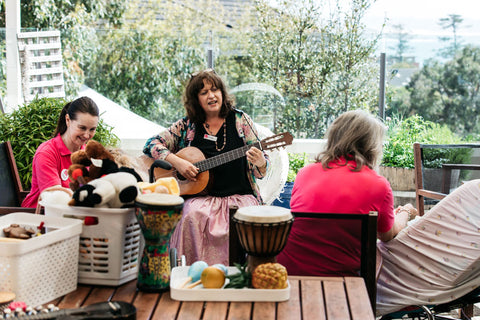
As a respite facility, Bear Cottage is a home away from home, as far removed from a hospital environment as possible. Staff do not wear uniforms, no medical procedures are carried out in the bedrooms, the children's rooms are designed to like a normal bedroom, and they even have a family pet, Beau, an adorable Labrador. Staff and volunteers are always on hand to take care of the cooking and cleaning, allowing families to forget about the stresses of everyday life and to be able to spend quality time together.
Bear Cottage is the only children's hospice in NSW and in the last 12 months has cared for 239 children and families for respite and end of life care.
The facility was established entirely through community support, at a cost of $10 million, and was officially opened on St Patrick's Day, 17 March 2001. This outstanding facility cares for children from across Australia, regardless of where they receive their primary care, although the majority of families that access the service are from NSW. There is no cost to the family for a stay at Bear Cottage and relies on the community to ensure that they are always there for those who need them.
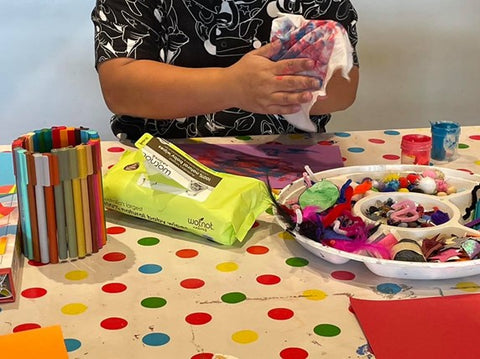
“In addition to the generous monetary contributions made by Wotnot, the donation of the Wotnot wipes for our own internal use at Bear Cottage has been invaluable. They are used throughout the Cottage by our nursing staff, housekeeping staff and Art and Child Life Therapists alike”
(Bronwen Simmons, Community Relations Manager at Bear Cottage)
To find out more, visit http://bearcottage.org.au/


