
- SHOP ALL
-
SUNSCREEN
- SPF + BB CREAM
- FACE WIPES
- BABY WIPES
-
ABOUT
-
EDUCATION

What is a BB Cream
Are you looking for a skincare and makeup hybrid that simplifies your beauty routine while enhancing your natural glow? Look no further than the wonder product that has taken the beauty world by storm – BB cream! BB cream, short for "blemish balm" or "beauty balm," is a versatile beauty product that combines a myriad of benefits in a single tube. Originally developed in Germany as a soothing and healing cream for patients who had undergone laser treatments or facial peels, BB creams have since become a daily must-have for busy women looking for multi-functional skincare product. In this comprehensive guide, we'll delve into everything you need to know about BB cream.

Myriad of Benefits of BB Cream:
1. Hydration:
The best BB creams come with moisturising ingredients like aloe vera, glycerin, or natural oils to keep your skin hydrated throughout the day. These ingredients replenish moisture, leaving your skin feeling soft, supple, and nourished.
2. Sun Protection:
UV exposure is responsible for 80% of visible facial aging signs. In addition, wearing sunscreen daily, and as directed, can lower your melanoma risk by up to 50%. Protect your skin from harmful UV rays with BB creams that offer high levels of SPF (sun protection factor). Look for formulations with broad-spectrum SPF 30 protection, to shield your skin from both UVA and UVB rays, reducing the risk of sunburn, premature aging, and skin cancer.
3. Flawless Coverage:
Some BB creams offer light coverage that needs to be enhanced by layering concealer or foundation. Achieve a natural-looking complexion with BB creams that provide natural mineral makeup coverage. These versatile products even out skin tone, blur imperfections, and conceal blemishes while still allowing your skin to breathe. They do not need to be enhanced with additional foundation or concealers.
4. Anti-aging serum:
The next generation of BB creams contain natural anti-aging serums, shown to stimulate collagen production in the skin, helping to improve elasticity and reduce the appearance of fine lines and wrinkles. By promoting collagen synthesis, it helps to firm and tighten the skin, resulting in a more youthful and rejuvenated complexion.
5. Skincare Benefits:
The best BB creams let you reap the benefits of additional skincare ingredients, such as antioxidants, vitamins, and botanical extracts. These ingredients nourish and protect your skin, helping to improve texture, minimise fine lines, and promote overall skin health.
BB cream offers a simple yet effective solution for achieving radiant and flawless skin. With its hydrating properties, sun protection, mineral makeup coverage, and skincare benefits, BB cream has earned its status as a beauty essential. Whether you're a beauty novice or a seasoned enthusiast, incorporating BB cream into your daily routine can help you unlock the secrets to glowing skinand flawless complexion, effortlessly.
BB Cream Tips & Tricks:
🌟 Choose the Right Shade: Make sure to pick a BB cream that matches your skin tone for a natural look. Test a small amount on your jawline to find your perfect match.
🧴 Prep Your Skin: Start with a clean, moisturized face. BB cream works best on well-hydrated skin.
🔄 Blend, Blend, Blend: Use your fingers, a sponge, or a brush to blend the BB cream into your skin. Start from the center of your face and work outwards for even coverage.
✨ Build It Up: For more coverage, apply a second layer. BB cream is buildable, so you can customize the coverage as needed.
🌞 Sun Protection: Our BB cream includes HIGH SPF 40 in the formula. Lightweight and non-greasy with a natural finish.

Join us for a step-by-step Get Ready With Me routine featuring our BB cream!
1. Cleanse & Moisturise: Begin with a gentle cleanser and a hydrating moisturizer.
2. Apply BB Cream: Squeeze a small amount of BB cream onto your fingertips and dot it onto your forehead, cheeks, nose, and chin. Blend it out evenly.
3. Conceal (If Needed): Use a concealer to cover any blemishes or dark circles that the BB cream didn’t fully conceal.
4. Set with Powder: For a matte finish, lightly dust a translucent powder over your face.
5. Add Some Colour: Apply a bit of blush to your cheeks for a healthy glow.
6. Define Your Eyes: A simple swipe of mascara and a touch of eyeliner can make your eyes pop.
7. Finish with Lips: Complete your look with a swipe of lip balm or your favorite lipstick.


How To Get Kids To Wear Sunscreen
Author: Caroline Farrer
Date: 28 Feb 24
We all know the importance of protecting our little ones from the sun to prevent sunburn and reduce the risk of melanoma down the road. While adults may be on board with the sunscreen routine, convincing kids to join can be more challenging.
In fact, Solmates Australia exists because of that very challenge! We designed and created our refillable sunscreen applicator because we were sick of the constant sunscreen battle with our young children.
Convincing them to pause to apply sunscreen when the park or pool is calling their name definitely isn't easy. Fear not! Here are our favourite tips to ensure your kids stay sun-safe and have a blast on your next outdoor escapade.
Kids thrive on routines, and knowing what to expect makes their days less chaotic. Transform sunscreen application into a habit, just like brushing their teeth or putting on their shoes.
Add it to the checklist of things to do before leaving the house, and soon, they'll know it's a part of the daily routine.
Empower your little ones by letting them be part of the sunscreen routine. While they may not be the sunscreen pros, involving them in the process can make it much more enjoyable for everyone.
You could apply the sunscreen, and they get to rub it in. Or use an applicator like the Solmate and let them apply it all by themselves!
Turn the sunscreen routine into a game, and you're sure to have willing participants. It's time to get a bit silly and think about how to make it enjoyable for all involved.
Who can create the squiggliest lines with their sunscreen before rubbing it in? For a change, you could try applying sunscreen in dots instead of your usual straight lines.
Sing their favourite song while applying for the little ones, or challenge the bigger kids to a sunscreen race against each other or the clock.
Remember, it doesn't have to be over-the-top – just a little something different to make sure your kids are smiling next time you reach for the sunscreen.
It is good to remember that ensuring that children wear sunscreen is not just about preventing sunburn—it's about instilling lifelong habits that promote sun safety and reduce the risk of skin cancer. By making sunscreen application a positive and engaging experience, we can encourage a long term positive approach to looking after yourself in the sun and safely enjoying the glorious Aussie outdoor lifestyle.


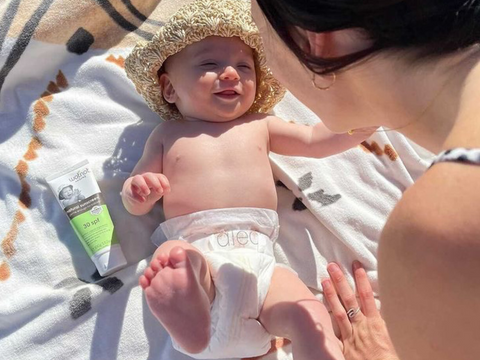
As parents, we prioritise the safety and well-being of our little ones above all else. When it comes to sun protection for babies, it is essential to find a baby sunscreen that not only shields them from harmful UV rays but also takes into account their sensitive and delicate skin. Natural sunscreens offer a fantastic alternative to conventional products, as they use gentle, plant-based ingredients that are less likely to cause irritation. In this blog, we will explore the key factors to consider when selecting the best natural sunscreen for your baby.
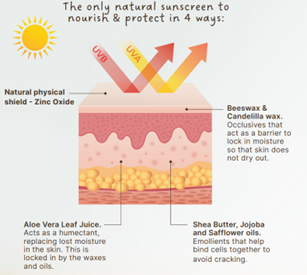
Conventional baby sunscreen contains chemical UV absorbers as their active ingredients. These chemicals absorb the sun’s harmful rays and mutate them into heat. Natural baby sunscreen are mineral-based using zinc oxide or titanium dioxide as their active ingredients. These minerals create a physical barrier on the skin, reflecting and scattering harmful UV rays away from your baby's delicate skin.
Choose a sunscreen with an SPF (Sun Protection Factor) of at least 30. SPF 30 provides high protection against UVB rays, filtering out around 97% of the sun's harmful rays. Higher SPF levels offer only marginal better protection with SPF 50 blocking out 98%. Often the chemicals needed to achieve this additional 1% protection can cause irritation or even stinging for people with sensitive skin.
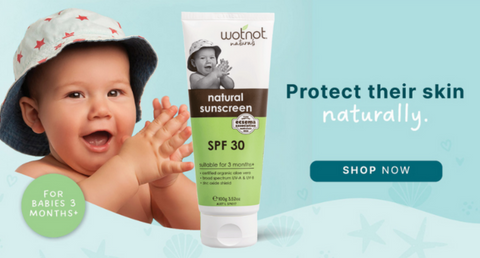
There are 2 things to consider; protection provided by the sunscreen and the brands transparency in disclosing all ingredients.
The SPF rating on your baby screen related to the protection it provides from UVB rays. UVB rays are primarily responsible for sunburn and the formation of malignant melanoma. Unless the sunscreen also provides broad-spectrum protection it will not protect against UVA rays. UVA rays penetrate the deeper layers of the skin and are responsible for premature skin aging as well as playing a role in skin cancer formation. Ensure that the natural sunscreen you choose for your baby offers both SPF 30 and broad-spectrum protection, guarding against both UVA and UVB rays.
Once you’ve identified that the sunscreen contain high-level, broad spectrum protection the next thing is to ensure that you can read ALL ingredients in the product. Because it’s not a legal requirement most sunscreen brands in Australia do not disclose their full ingredient list. Brands that have nothing to hide are happy to be fully transparent with consumers. Only choose a baby sunscreen that lets you know exactly what you are putting on your baby’s skin.
It’s important to note that an infant’s skin is different from an adult’s. Our bodies produce a pigment called melanin that protects our skin from ultraviolet damage by causes it to darken/tan. An infant produces less melanin than an adult which means that their skin will burn more quickly.
An infant’s skin is thinner and contains more water than an adult. Also the top layer of an infant’s skin called the epidermis doesn’t bond as tightly to the layer below called the dermis. So unlike adult skin that has a tight seal between these layers, an infant’s skin is easier to pass. This is significant when also coupled with the fact that infants lack fully developed detoxification systems.
Babies and infants should be kept out of direct sun exposure but if you need to use a sunscreen choose a sunscreen for sensitive skin with a physical active like zinc that is dispersed in a natural lotion. Read the product label carefully to check if it is hypoallergenic and free from potential irritants such as fragrance, parabens, phthalates, and artificial colours.
When it comes to safeguarding your baby's skin from the sun's harmful rays, your number one defence is to keep baby out of direct sunlight during the hottest part of the day. Cover exposed skin with appropriate clothing, sunhat and eyewear and babies under 3 months should avoid direct sun exposure. Look for mineral-based, broad-spectrum protection with a suitable SPF level. Prioritise products formulated for sensitive skin. By being sun smart and making an informed choice, you can ensure your little one enjoys the great outdoors safely and comfortably.
When choosing a natural sunscreen for yourself the same guidelines apply. Choose a product that is fully transparent, that lets you know exactly what you are putting on your skin. If you have extra sensitive or very dry skin, a sunscreen that is deeply nourishing with a high level of natural oils will help soothe and hydrate the skin. Natural options are also available for people who prefer a matt finish.


